
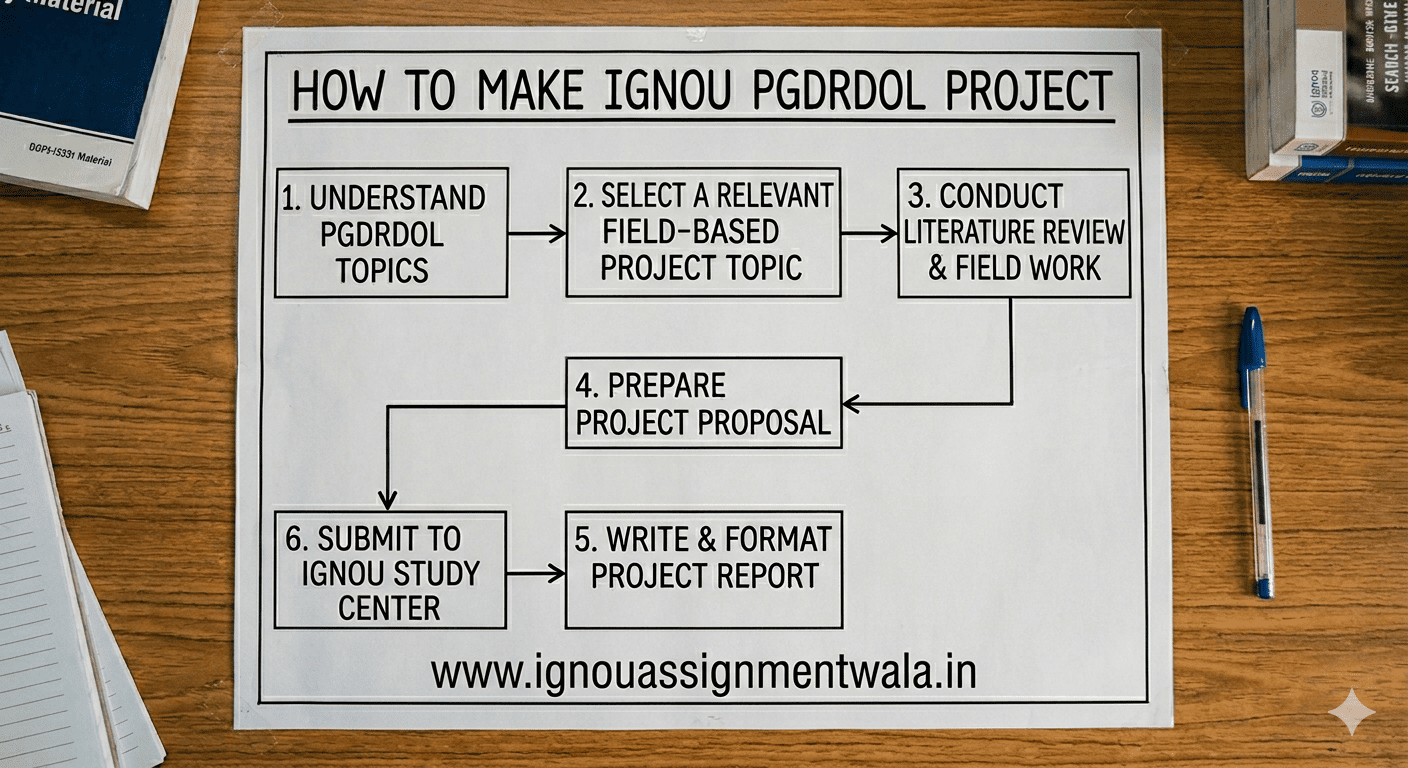
How to Make an IGNOU PGDRDOL Project: Complete Step-by-Step Guide
Introduction
The IGNOU PGDRDOL (Post Graduate Diploma in Rural Development – Open and Distance Learning) project is a crucial academic requirement that allows students to apply theoretical knowledge to real-world rural development issues. It is not just a formal assignment but a practical exercise designed to build research skills, analytical thinking, and field-level understanding.
Many students struggle with how to start, structure, and complete the project effectively. This comprehensive guide will walk you through every step—from topic selection to final submission—ensuring that your project is well-structured, impactful, and aligned with IGNOU guidelines.
Understanding the Purpose of the PGDRDOL Project
Before starting, it is important to understand why this project matters. The PGDRDOL project aims to:
- Develop research and analytical skills
- Provide field-level exposure
- Encourage problem-solving in rural contexts
- Bridge theory and practice
This project is typically based on real-life rural issues such as agriculture, employment, health, education, women empowerment, or government schemes.
Step 1: Understanding IGNOU Project Guidelines
The first and most important step is to carefully read the official IGNOU project guidelines provided in your study material or regional center.
Key points to focus on:
- Word limit (usually 5000–7000 words)
- Format and structure
- Submission deadlines
- Evaluation criteria
- Requirement of synopsis approval (if applicable)
Ignoring these guidelines can lead to rejection, so follow them strictly.
Step 2: Selecting the Right Topic
Choosing the right topic is critical for your project’s success. Your topic should be:
- Relevant to rural development
- Practical and field-based
- Easy to collect data on
- Interesting to you
Popular PGDRDOL Project Topics
- Impact of government schemes in rural areas
- Role of self-help groups (SHGs)
- Rural employment and MGNREGA
- Women empowerment in villages
- Rural health and sanitation
- Agricultural practices and challenges
- Digital literacy in rural areas
Tips for Topic Selection
- Choose a local issue you can easily study
- Avoid very broad topics
- Ensure data availability
- Select a topic that allows fieldwork
Step 3: Preparing the Project Proposal (Synopsis)
Some IGNOU programs require a synopsis before starting the project.
What to Include in the Synopsis
- Title of the project
- Introduction
- Objectives
- Research methodology
- Study area
- Expected outcomes
Sample Objective
- To analyze the impact of MGNREGA on rural employment in a selected village
Keep the synopsis short (2–5 pages) and clear.
Step 4: Structuring Your Project
A well-structured project is essential. Below is the standard format:
1. Title Page
- Project title
- Your name
- Enrollment number
- Course name
- Study center
- Submission date
2. Certificate
A declaration signed by you stating the work is original.
3. Acknowledgement
Thank your guide, institution, and participants.
4. Table of Contents
List all chapters with page numbers.
Step 5: Writing the Main Content
Chapter 1: Introduction
This chapter provides background information.
Include:
- Overview of the topic
- Importance of the study
- Problem statement
- Objectives
- Scope of the study
Example:
Rural development plays a crucial role in improving the socio-economic conditions of people living in villages. This study focuses on…
Chapter 2: Literature Review
This section reviews previous studies related to your topic.
Include:
- Books
- Research papers
- Government reports
Purpose:
- Understand existing knowledge
- Identify research gaps
Chapter 3: Research Methodology
Explain how you conducted your research.
Include:
- Research design (descriptive, analytical, etc.)
- Study area (village/region)
- Sample size
- Data collection methods
Data Collection Methods
- Primary data (survey, interviews)
- Secondary data (books, reports, websites)
Chapter 4: Data Analysis and Interpretation
This is the most important part of your project.
Include:
- Survey results
- Tables and charts
- Analysis of responses
Example:
- Percentage of people benefiting from a scheme
- Comparison between different groups
Use simple language and clear explanations.
Chapter 5: Findings and Discussion
Summarize key findings:
- What did you observe?
- What patterns did you find?
- What problems exist?
Discuss how your findings relate to objectives.
Chapter 6: Conclusion and Suggestions
Provide:
- Final conclusion
- Recommendations for improvement
Example:
- Government should improve awareness programs
- Training programs should be introduced
Step 6: Adding References and Bibliography
Mention all sources used.
Format Example
- Author name
- Book/article title
- Year
- Publisher
Example:
Sharma, R. (2020). Rural Development in India. XYZ Publications.
Step 7: Annexure (Optional)
Include:
- Questionnaire
- Survey forms
- Additional data
Step 8: Formatting Guidelines
Follow these standard formatting rules:
- Font: Times New Roman
- Size: 12
- Line spacing: 1.5
- Margins: Proper spacing
- Page numbers: Bottom center
Step 9: Field Survey Tips
Fieldwork is a key part of PGDRDOL projects.
How to Conduct a Survey
- Prepare a questionnaire
- Visit the village
- Talk to respondents politely
- Collect genuine data
Sample Questions
- Are you aware of government schemes?
- Have you benefited from any scheme?
- What are the main problems in your village?
Step 10: Common Mistakes to Avoid
- Copy-paste content (plagiarism)
- Poor structure
- Lack of field data
- Ignoring guidelines
- Weak analysis
Always ensure originality and clarity.
Step 11: Final Submission
Before submitting:
- Check spelling and grammar
- Verify formatting
- Ensure all sections are included
- Attach required documents
Submit to your IGNOU study center before the deadline.
Tips to Score High Marks
- Choose a practical topic
- Use real data
- Write clearly and simply
- Include charts and tables
- Provide strong analysis
- Follow guidelines strictly
Conclusion
The IGNOU PGDRDOL project is not just an academic requirement—it is an opportunity to understand real rural issues and contribute meaningful insights. With proper planning, structured writing, and genuine fieldwork, you can create a high-quality project that not only scores well but also enhances your knowledge and skills.
By following this step-by-step guide, you can confidently complete your project without confusion. Stay consistent, focus on quality, and ensure originality in your work.
Bonus: Quick Checklist
- Topic selected ✔
- Synopsis prepared ✔
- Field survey completed ✔
- Chapters written ✔
- Data analyzed ✔
- References added ✔
- Formatting done ✔
- Final review completed ✔

