
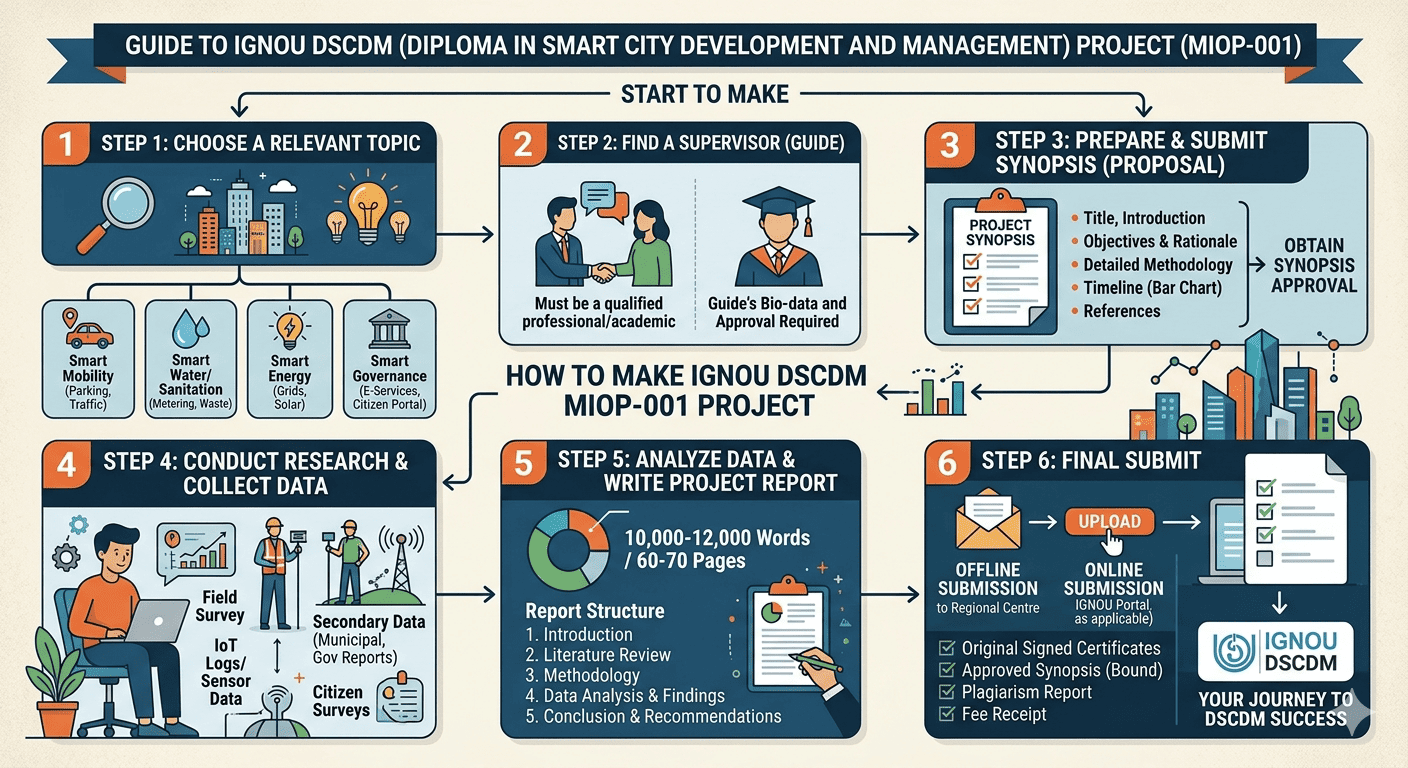
How to Prepare IGNOU DSCDM MIOP-001 Project: Complete Step-by-Step Guide (2026)
If you are pursuing the Diploma in Supply Chain Management (DSCDM) from IGNOU, then the MIOP-001 project is one of the most important components of your course. Many students feel confused about how to start, what topic to choose, and how to write a proper report that scores good marks.
This detailed guide will help you understand everything—from topic selection to final submission—in a simple and practical way.
Understanding the Importance of MIOP-001 Project
The MIOP-001 project is not just a formal requirement. It is designed to test your ability to apply theoretical knowledge of supply chain management in real-world situations. Through this project, you learn how businesses manage inventory, logistics, procurement, and distribution systems.
In today’s competitive environment, companies rely heavily on efficient supply chain systems to reduce costs and improve customer satisfaction. This project gives you a practical understanding of those systems.
What IGNOU Expects from Your Project
IGNOU expects a well-structured, original, and analytical report. The focus should be on:
- Practical understanding of supply chain processes
- Use of real or realistic data
- Logical analysis and interpretation
- Clear presentation of findings and suggestions
The ideal length is usually around 8000–10000 words, but quality matters more than quantity.
Choosing the Right Project Topic
Selecting a good topic is the first and most important step. A strong topic makes your work easier and improves your chances of scoring high marks.
Some popular and effective topic areas include:
- Inventory management in retail businesses
- Supply chain efficiency in e-commerce companies
- Logistics and transportation management
- Warehouse management systems
- Demand forecasting in supply chain
- Vendor and supplier management
Always choose a topic that is practical and easy to understand. If possible, select a topic related to a real business or your own experience.
How to Start Your Project
Once your topic is finalized, the next step is planning. Start by understanding the problem you want to study.
For example, if your topic is inventory management, your problem could be:
- Excess stock in warehouses
- Frequent stockouts
- Poor demand forecasting
After defining the problem, set clear objectives. These objectives guide your entire project.
Writing an Effective Introduction
The introduction is the first impression of your project. It should explain:
- What is supply chain management
- Why it is important
- What area you are focusing on
- What your study aims to achieve
Try to connect your topic with real-world business situations. This makes your project more meaningful and practical.
Building Strong Conceptual Understanding
Before analyzing anything, you must understand the basic concepts of supply chain management.
Some key concepts you should cover include:
- Procurement and sourcing
- Inventory management
- Warehousing
- Transportation and logistics
- Distribution systems
You can also include important models such as:
- Economic Order Quantity (EOQ)
- Just-in-Time (JIT)
- Lean supply chain
This section shows that you understand the theory behind your topic.
Collecting Data for Your Project
Data collection is a crucial part of your project. Without proper data, your project will look incomplete.
You can collect two types of data:
Primary Data
- Surveys
- Questionnaires
- Interviews
Secondary Data
- Books
- Websites
- Research articles
- Company reports
Even simple data is fine, but it should be relevant to your topic.
How to Analyze Data Properly
Analysis is the heart of your project. This is where you show your understanding and skills.
You can use:
- Tables
- Charts
- Graphs
- Percentage analysis
For example, you can analyze:
- Inventory turnover
- Delivery time
- Stock availability
- Customer demand patterns
After presenting the data, always explain what it means. Do not just show numbers—interpret them.
Presenting Findings Clearly
Your findings should highlight the key problems in the system you studied.
Some common findings in supply chain projects include:
- Poor inventory control
- Delays in supply
- High logistics costs
- Lack of technology
- Inefficient warehouse management
Keep your findings clear, simple, and directly connected to your data.
Giving Practical Suggestions
This is one of the most important parts of your project. Your suggestions should be practical and realistic.
Some strong recommendations include:
- Use inventory management software
- Improve demand forecasting techniques
- Adopt digital tracking systems
- Optimize transportation routes
- Strengthen supplier relationships
Avoid writing general or vague suggestions. Be specific and practical.
Writing a Strong Conclusion
The conclusion should summarize your entire work.
It should briefly cover:
- What you studied
- What you found
- Why it is important
Do not introduce new points in the conclusion. Keep it clear and focused.
Common Mistakes Students Make
Many students lose marks due to simple mistakes. Avoid these:
- Copy-paste content from the internet
- No proper structure
- Weak data analysis
- Poor formatting
- Lack of clarity
Always revise your work before submission.
Tips to Score High Marks
If you want better marks, follow these tips:
- Choose a simple and practical topic
- Use real-life examples
- Add charts and tables
- Keep language clear and professional
- Maintain proper structure
- Avoid plagiarism
Presentation matters as much as content.
Final Submission Guidelines
Before submitting your project, check:
- All sections are complete
- Page numbers are added
- No spelling or grammar mistakes
- Proper formatting is followed
- Project is neatly bound
A clean and professional presentation creates a positive impression.
Final Thoughts
The IGNOU DSCDM MIOP-001 project is a great opportunity to learn practical aspects of supply chain management. Instead of treating it as just an assignment, use it as a chance to develop real-world skills.
With proper planning, clear understanding, and structured writing, you can easily complete your project and score good marks.