
📘 IGNOU M.COM (MCOP-01) PROJECT
🔷 1. INTRODUCTION
The Master of Commerce (M.Com) program offered by IGNOU (Indira Gandhi National Open University) is designed to provide advanced knowledge in commerce, finance, accounting, and management. One of the most crucial components of this program is the MCOP-01 Project, which is a compulsory course aimed at developing research and analytical skills among students.
The MCOP-01 project is not merely a formal academic requirement; rather, it is a practical exercise that allows students to apply theoretical knowledge in real-life situations. It involves identifying a research problem, collecting relevant data, analyzing it systematically, and drawing meaningful conclusions.
In today’s dynamic business environment, organizations rely heavily on data-driven decisions. Therefore, the ability to conduct research and interpret data is highly valuable. The MCOP-01 project helps students acquire these essential skills, making them more competent and industry-ready.
🔷 2. OBJECTIVES OF THE MCOP-01 PROJECT
The primary objectives of the MCOP-01 project are as follows:
- To develop research aptitude among students
- To enhance analytical and problem-solving skills
- To provide practical exposure to real-world business situations
- To enable students to apply theoretical concepts in practice
- To improve report writing and presentation skills
Through this project, students gain hands-on experience in conducting research and presenting their findings in a structured manner.
🔷 3. SIGNIFICANCE OF PROJECT WORK
The MCOP-01 project holds immense importance in both academic and professional contexts.
Academic Significance:
- Bridges the gap between theory and practice
- Encourages independent learning
- Enhances understanding of research methodology
Professional Significance:
- Strengthens resume and career prospects
- Provides practical exposure
- Helps in job interviews and professional discussions
Personal Development:
- Builds confidence
- Improves critical thinking
- Enhances communication skills
🔷 4. SELECTION OF RESEARCH TOPIC
Selecting an appropriate topic is one of the most critical steps in the project.
Characteristics of a Good Topic:
- Clear and specific
- Relevant to commerce or business
- Availability of data
- Practical applicability
- Interesting to the researcher
Examples of Suitable Topics:
- Consumer Satisfaction Analysis
- Investment Behavior in Mutual Funds
- Digital Banking Services
- Customer Loyalty in E-commerce
A well-chosen topic simplifies the entire research process and improves the quality of the project.
🔷 5. SYNOPSIS WRITING
The synopsis is a brief outline of the proposed research study. It acts as a blueprint for the project.
Components of a Synopsis:
1. Title of the Study
A clear and concise title representing the research problem.
2. Introduction
Provides background information and context of the study.
3. Need for the Study
Explains why the research is important.
4. Objectives of the Study
Defines the goals of the research.
5. Research Methodology
Describes methods of data collection and analysis.
6. Chapter Plan
Outlines the structure of the final report.
7. Expected Outcomes
Indicates anticipated findings.
A well-written synopsis is essential for approval and ensures clarity in research direction.
🔷 6. RESEARCH METHODOLOGY
Research methodology is the backbone of the project. It defines how the study will be conducted.
Types of Research:
- Descriptive Research
- Analytical Research
Sources of Data:
- Primary Data: Collected through surveys, questionnaires, interviews
- Secondary Data: Collected from books, journals, websites
Sampling:
- Sample Size: Usually 50–100 respondents
- Sampling Techniques: Random sampling, convenience sampling
Tools of Analysis:
- Percentage method
- Graphical representation (bar charts, pie charts)
A well-defined methodology ensures reliability and validity of the research.
🔷 7. DATA COLLECTION
Data collection is a crucial step in the research process.
Primary Data Collection Methods:
- Questionnaires
- Interviews
- Surveys
Secondary Data Sources:
- Academic journals
- Books
- Official websites
Accurate and relevant data enhances the credibility of the project.
🔷 8. DATA ANALYSIS
Data analysis involves organizing and interpreting collected data to derive meaningful insights.
Common Methods:
- Percentage analysis
- Tabulation
- Graphical representation
Example:
- 60% respondents satisfied
- 25% neutral
- 15% dissatisfied
Effective analysis helps in identifying patterns and trends.
🔷 9. INTERPRETATION OF DATA
Interpretation involves explaining the meaning of analyzed data.
For example:
If the majority of respondents are satisfied, it indicates good product performance. However, dissatisfaction in certain areas may highlight scope for improvement.
🔷 10. FINDINGS OF THE STUDY
Findings are the key outcomes derived from the analysis.
Example Findings:
- Customers prefer branded products
- Price influences buying decisions
- Quality and service impact satisfaction
Findings should be clear, concise, and directly related to objectives.
🔷 11. SUGGESTIONS
Suggestions are practical recommendations based on findings.
Example:
- Improve after-sales service
- Offer competitive pricing
- Enhance product quality
Suggestions should be realistic and actionable.
🔷 12. CONCLUSION
The conclusion summarizes the entire study.
It should:
- Reflect objectives
- Highlight key findings
- Provide final insights
A strong conclusion leaves a lasting impression.
🔷 13. STRUCTURE OF THE PROJECT REPORT
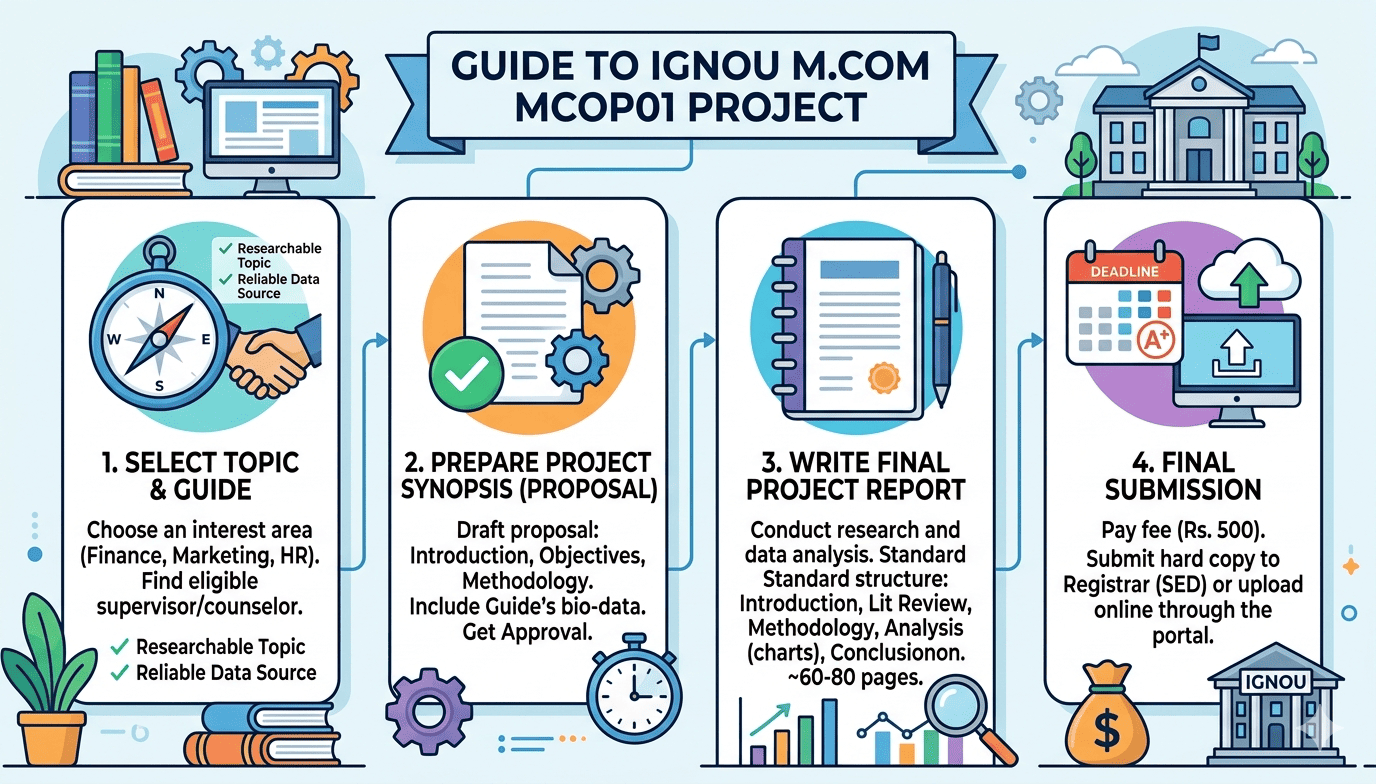
The final project report typically includes:
Preliminary Pages:
- Cover Page
- Certificate
- Declaration
- Acknowledgement
- Table of Contents
Main Chapters:
- Introduction
- Literature Review
- Research Methodology
- Data Analysis and Interpretation
- Findings, Suggestions, and Conclusion
Final Sections:
- Bibliography
- Annexure
🔷 14. QUESTIONNAIRE DESIGN
A questionnaire is an essential tool for primary data collection.
Guidelines:
- Keep questions simple and clear
- Avoid ambiguity
- Include both open-ended and closed-ended questions
- Ensure relevance to objectives
🔷 15. REVIEW OF LITERATURE
This section reviews previous studies related to the topic.
Importance:
- Provides background
- Identifies research gap
- Strengthens the study
🔷 16. PRESENTATION AND FORMATTING
Proper presentation enhances the readability of the project.
Tips:
- Use consistent formatting
- Proper headings and subheadings
- Include tables and charts
- Maintain neatness and clarity
🔷 17. VIVA VOCE PREPARATION
After submission, students must appear for viva.
Common Questions:
- Why did you choose this topic?
- What methodology did you use?
- What are your findings?
Preparation and confidence are key to success.
🔷 18. COMMON MISTAKES TO AVOID
- Plagiarism
- Poor data quality
- Lack of analysis
- Improper formatting
- Missing guide signature
Avoiding these mistakes ensures better evaluation.
🔷 19. SUBMISSION GUIDELINES
- Ensure synopsis approval
- Get guide’s signature
- Proper binding (spiral/hard)
- Submit before deadline
🔷 20. FINAL CONCLUSION
The MCOP-01 project is a valuable opportunity for students to develop research and analytical skills. It not only enhances academic knowledge but also prepares students for professional challenges.
By following proper guidelines, selecting a suitable topic, and conducting systematic research, students can successfully complete the project and achieve high marks.
🔥 FINAL NOTE
The MCOP-01 project can be:
✔ Easy if properly planned
✔ Scoring if correctly formatted
✔ Valuable for career growth